Booming of Global Digital Economy Brings Huge Challenges and Opportunities to Data Centers

The advent of next-generation technologies, including 5G, Big Data, and Artificial Intelligence, has revolutionized the computing power of Internet Data Centers (IDCs). These advancements have enabled exponential improvements in processing capabilities, allowing IDCs to handle massive data volumes with unprecedented speed and efficiency. As a result, enterprises can now leverage these technologies for real-time analytics, smarter decision-making, and seamless operations, fostering innovation and driving digital transformation across industries.

Sangfor Distrubutor UAE

Aligned with the global mission of achieving “carbon peak and carbon neutrality,” energy conservation and carbon reduction have become critical performance indicators for IDCs. By adopting green technologies, optimizing energy consumption, and integrating renewable energy sources, IDCs are leading the way in creating sustainable, eco-friendly data infrastructure that supports global environmental goals. These efforts not only reduce operational costs but also position IDCs as key players in the transition to a low-carbon economy.

Unique Benefits of Cloud DC Solutions

400G High-speed Interconnection Solution

Pain Points

  • Surging Demand for 400G Bandwidth: Rapidly growing data traffic requires high-capacity solutions.

  • Cost Reduction for DCI: Enterprises need cost-effective Data Center Interconnect (DCI) solutions.

  • Enhanced Security: Increased focus on securing long-distance data transmission.

Solution

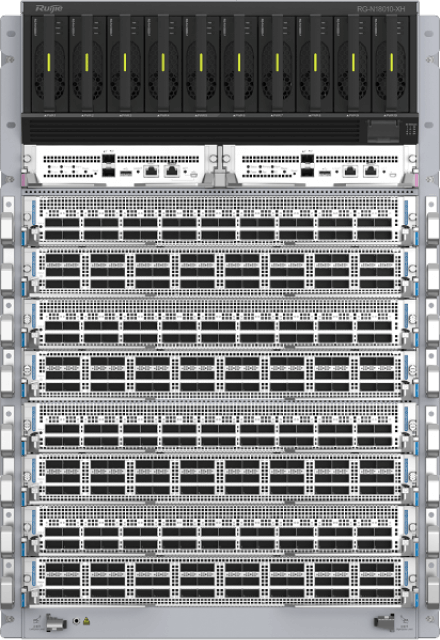
The RG-N18000-XH Series Switch is a high-density 400G fixed core switch, designed for large-scale IDC core networks and ultra-large DCI scenarios. It delivers high-speed transmission, robust security, and energy efficiency while offering a seamless upgrade path to 800G, ensuring future-ready network performance for the next decade.

Benefits

  • High-Speed Interconnection and Efficiency

    • Supports 100G/400G/800G full line-rate ports, meeting large-scale IDC core interconnection needs.

    • Integrates SRv6 technology for cloud-network synergy, refined traffic scheduling, and optimal DCI bandwidth utilization.

    • Reduces intermediate transmission devices with the 400G ZR/ZR+ module, cutting DCI costs by 15%–30%.

  • Energy Efficiency and Sustainability

    • Reduces power consumption by 25% with 400G line cards, saving up to 100,000 kWh annually per device compared to previous-generation architectures.

  • Enhanced Security and Stability

    • Employs full line-rate MACsec encryption for secure, long-distance data transmission.

    • Enables intelligent O&M, reducing operational expenses and improving system reliability.

AI DC Solution

Pain Points

  1. Inefficient Training Due to Packet Loss

    • In AI computing, RDMA networks are critical for improving GPU training and inference.

    • Even a packet loss rate of 0.1% significantly reduces effective network throughput, while a 2% loss renders RDMA throughput zero.

    • To maintain optimal RDMA throughput, the packet loss rate must be below 0.001%, ideally 0%.

  2. Complex RDMA Network Configuration

    • RDMA setup involves dozens of intricate parameter adjustments.

    • Network configuration and threshold optimization can take over a month, delaying cluster deployment.

Solution

  • Utilizes PFC and ECN technologies on DC switches with the RoCEv2 protocol for dynamic traffic backpressure.

  • Ensures zero packet loss across the network, enhancing AI training efficiency.

Benefits

  1. Efficient AI Training

    • Backpressure mechanisms eliminate packet loss, ensuring RDMA network stability and maximizing training performance.

  2. Simplified Deployment

    • Built-in automation scripts streamline RDMA network setup with just a few clicks, eliminating the need for extensive learning or manual parameter adjustments.

Low-carbon DC Solution

Pain Points

  1. Challenges in Cooling and Energy Efficiency

    • As policies drive towards “carbon peaking and neutrality,” intensive, green, and super-scale DCs are now a priority.

    • Traditional air cooling fails to meet the PUE (Power Usage Effectiveness) and heat dissipation demands of future DCs.

  2. Rising Power Consumption in DCI

    • Advancements in switching chips, SerDes, and optical modules increase power demands, posing challenges in energy efficiency.

  3. High Energy Use in Large Data Centers

    • IT equipment accounts for over 50% of energy consumption in large DCs, making efficient cooling and energy reduction critical issues for sustainable construction.

Solution

  1. CPO Technology

    • Integrates silicon optical modules and switching chips onto a single ASIC, reducing the SerDes drive capacity and wiring distance for improved efficiency.

  2. NPO and Cold-Plate Liquid Cooling

    • Combines an open optical engine interface with a standardized architecture for chip decoupling and shorter signal links.

    • Uses 3M fluorinated liquid and an independent cold plate for cooling, with a built-in micro-leak detection system to ensure reliability.

  3. Immersion Liquid Cooling

    • Immerses switches in insulated, non-corrosive coolant for direct heat transmission, ensuring effective heat dissipation and protecting components from high-temperature failure or aging.

Pain Points

  1. Manual Configuration

    • Post-cloud deployment, network configuration remains manual, slowing down service deployment.

  2. Rigid Cloud-Network Binding

    • Existing cloud-network connections lack flexibility, requiring an open model for seamless service integration.

Solution

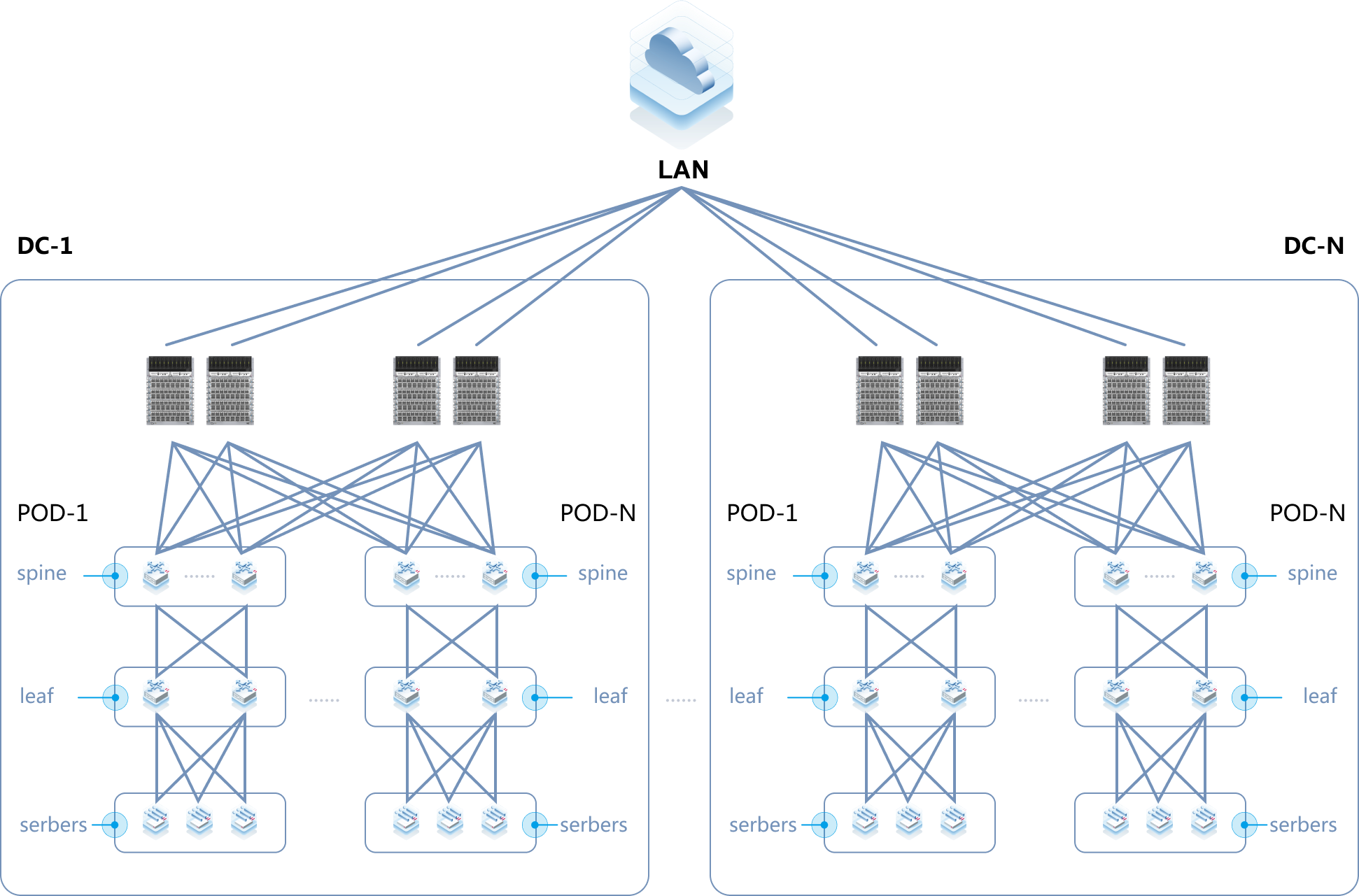
  • SDN Controller Integration

    • Connects the SDN controller with cloud platforms, enabling cloud-network integration and accelerating service deployment.

Benefits

  1. Fast Deployment

    • Routing Protocols: Supports OSPF and ISIS for underlay routing.

    • Flexible Networking: Offers centralized and distributed overlay modes.

    • Reliable TOR Access: Includes VSU, M-LAG, and pure router support.

    • Comprehensive Planning: Manages address pools, southbound protocols (e.g., NETCONF, SNMP), and topology designs.

  2. Open Interconnection

    • Achieves compatibility with products from 12 leading cloud platform providers, ensuring broad interoperability.

  3. Cloud-Network Collaboration

    • Enhances operational efficiency through seamless integration between the Ruijie DC network and cloud platforms.
Request Enquiry